Reclaiming Pleasure for Latina Trauma Survivors
You Were Made for More Than Survival: Reclaiming Pleasure, Safety, & Joy After Trauma
So many Latina women know how to survive. We learn early how to carry pain quietly, care for everyone else first, push through exhaustion, and keep showing up even when our bodies are begging us to slow down. Survival mode becomes normalized, hyper-independence becomes praised, and disconnection from the body becomes mistaken for strength.
But living in survival mode was never meant to be the final destination.
At some point, many trauma survivors begin asking a different question:
What would it feel like to truly feel alive again?
Not just functioning. Not just coping. But experiencing safety, softness, connection, pleasure, rest, joy, and presence in the body again.
For Latina survivors, trauma does not happen in isolation. It exists within larger cultural, familial, generational, and systemic contexts that shape how we understand our bodies, boundaries, sexuality, emotions, and worth. Many of us were raised within sexist messages that taught us to stay quiet, stay loyal, stay small, or prioritize survival over self. Conversations surrounding pleasure, desire, emotional needs, or sexual wellness were often silenced altogether.
This is why reclaiming pleasure can feel so radical.
And reclaiming pleasure is about so much more than sexuality.
Pleasure can look like finally taking a deep breath without your nervous system bracing for danger, laughing without experiencing guilt, resting without needing to earn it, & feeling safe enough to say “no”, but also worthy enough to say “yes.” Trusting your body again after years of disconnection can be intimidating. But I promise if you allow yourself to experience pleasure through softness, intimacy, creativity, joy, movement, music, touch, nourishment, and rest, your body and mind will begin to remember what safety, connection, and aliveness truly feel like.
Allow me to remind you of the following:
Pleasure is not selfish.
Pleasure is not something survivors have to “earn” after healing.
Pleasure is part of healing.
As a sex & trauma therapist, I often remind survivors that trauma impacts the nervous system, the body, relationships, sexuality, self-worth, and one’s ability to feel safe in moments of joy. Healing therefore cannot only happen cognitively because we cannot simply “think” ourselves into safety while remaining disconnected from our bodies.
This is why trauma-informed healing practices that serve the entire body absolutely matter.
Healing from trauma may include therapy that is culturally responsive, body-aware, and sex-positive. It may include mindfulness, grounding practices, breathwork, movement, sound healing, nervous system regulation, pleasure mapping, boundary work, or reconnecting with trusted community. Healing may also involve grieving the parts of yourself that had to disappear in order to survive.
And the most important: healing is not meant to happen alone.
For Latinas especially, community has always been our medicine. Our healing has always lived in connection to storytelling, shared meals, music, laughter, collective care, sisterhood, spirituality, and spaces where we no longer have to perform strength alone.
There is deep repair that happens when a survivor realizes:
“I am not too much.”
“My body is not the enemy.”
“I deserve more than survival.”
If you are on this journey of reclaiming yourself after trauma, I hope you know this:
Your healing does not require you to become someone entirely new.
Often, healing is about returning to the parts of yourself trauma tried to take.
Your joy matters.
Your softness matters.
Your pleasure matters.
Your body deserves to feel safe enough to experience life fully again.
You were never made just to survive.
You were made to live.
con cariño,
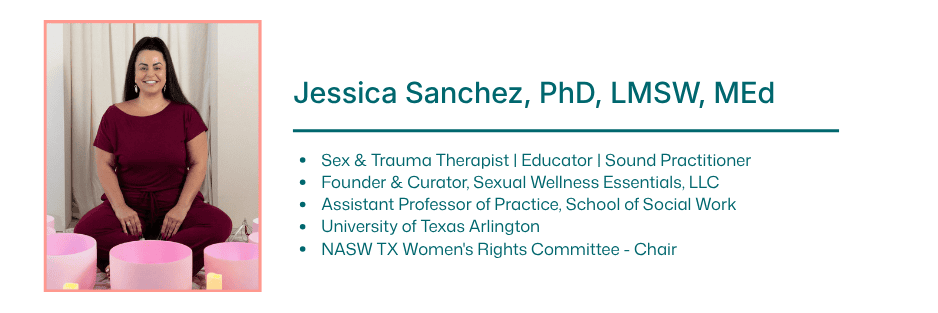
Dra. Jessica
Website: www.drjsanchez.com
LinkedIn: Dr. Jessica Sanchez PhD, LMSW, MEd